
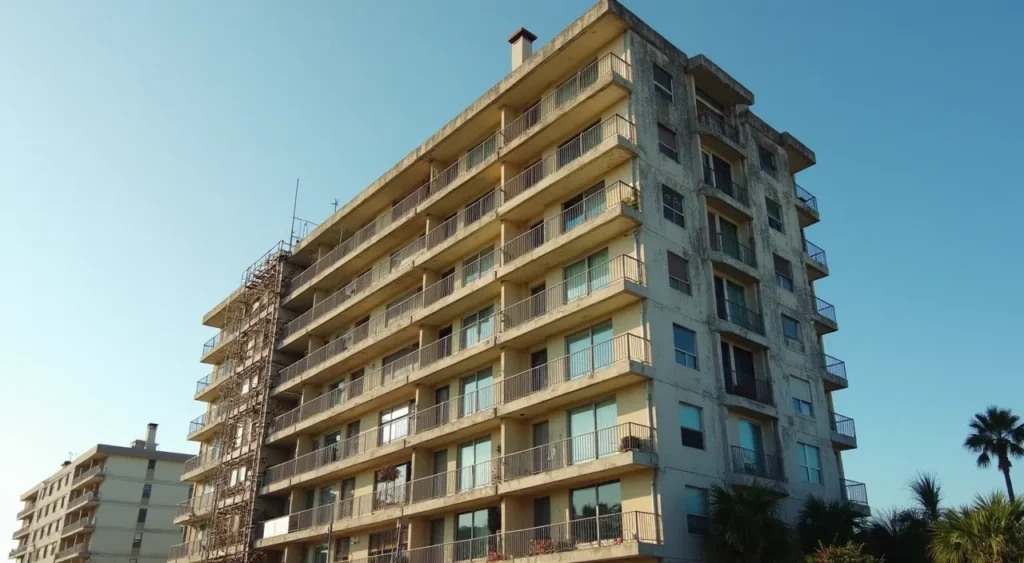
A Florida condo with a pending special assessment can be sold, but it must be disclosed and the estoppel certificate from the association will show it regardless. The practical problem is that lenders review association finances, and an underfunded reserve, an open milestone inspection finding or pending litigation can make an entire building ineligible for conventional financing. When that happens no financed buyer can purchase any unit in the building, and the buyer pool collapses to cash.
What changed in Florida condo law
Following the Surfside collapse, Florida enacted structural safety requirements that reshaped the older condominium market. Two provisions matter most to sellers.
Milestone inspections. Condominium and cooperative buildings of three storeys or more must undergo a structural milestone inspection at a set age, earlier for buildings near the coast, and then on a recurring cycle. Where the inspection identifies substantial structural deterioration, a further phase of evaluation and a repair program follow.
Structural integrity reserve studies. Associations must have a reserve study covering major structural components and must fund those reserves. The long-standing practice of voting each year to waive or underfund reserves is no longer freely available for the covered components.
The combined effect is that associations which deferred maintenance for decades are now facing the true cost at once, and passing it to owners as assessments.
Why the unit will not sell on the open market
Lenders underwrite the building, not just the unit. Conventional and government-backed loan programs review association finances, reserve funding, the percentage of delinquent owners, investor concentration and pending litigation. Fail those tests and the building becomes unwarrantable, meaning no conventional financing for any unit in it.
At that point your buyer pool is cash only. And most cash buyers in that situation are investors who want compensating for the uncertainty. Meanwhile the assessment continues, monthly dues typically rise, and the unit sits.
The documents to gather now
Whether you list or sell to a cash buyer, you will need these, so collect them early.
- The most recent structural integrity reserve study
- The milestone inspection report, if one has been completed
- Current budget and reserve balances
- Board meeting minutes covering any assessment discussion
- Any assessment notice already sent to owners, with the payment schedule
- The estoppel certificate, ordered through closing
- Details of any litigation involving the association
The estoppel certificate is where surprises surface. Florida law requires the association to provide it within a set period and caps what it may charge. It states exactly what the unit owes: dues, assessments, fines and transfer fees.
Who pays the assessment
This is negotiable and it belongs in the contract in explicit terms. Common approaches are that the seller pays a levied assessment in full at closing, that it is prorated, or that the buyer assumes the remaining installments with the price adjusted accordingly.
What is not negotiable is disclosure. Florida requires sellers to disclose known material facts affecting value that are not readily observable, and a pending six-figure assessment qualifies. It will appear on the estoppel anyway, so concealing it achieves nothing except killing the deal late.
If you cannot pay the assessment
This is a genuinely difficult position, particularly for retirees on fixed incomes who own their unit outright and are handed a bill they cannot fund. Unpaid assessments accrue interest and late fees, and Florida associations can place a lien on the unit and ultimately foreclose it.
Selling before that process advances preserves whatever equity exists. Selling after the association has liened and moved to foreclose preserves considerably less.
Questions
Frequently asked
Do I have to pay the assessment before selling?
Not necessarily. Who pays is a contract term. Disclosure is not optional.
What is an estoppel certificate?
An association-issued statement of exactly what the unit owes. It is ordered during closing and it is where undisclosed amounts appear.
My building failed its milestone inspection. Can I still sell?
Yes. The scope of the findings and the association’s funding plan drive the price rather than whether a sale is possible.
Can the association block my sale?
Many declarations require board approval of a buyer. That is an approval process with a timeline, not usually an outright veto, but it needs to be built into the closing date.
Does this affect 55-plus communities too?
Yes, and those units face an additional constraint: age restrictions already narrow the buyer pool considerably before any assessment is added.