
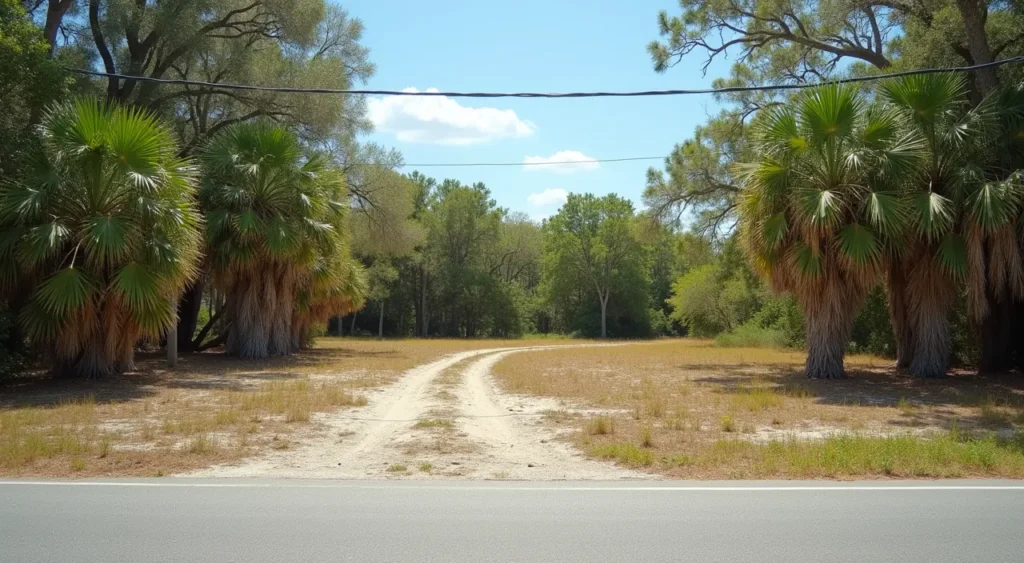
If you inherited a vacant Florida lot you have probably never seen, it is most likely part of a 1950s or 1960s mass-platted subdivision sold nationally by mail. These lots are real and they have value, but that value varies enormously by whether the lot has road access, utilities and a legal building envelope. Many also carry years of unpaid taxes and municipal assessments, and the title chain may not have been touched since the original purchaser died.
Where these lots came from
In the post-war decades several development companies platted enormous tracts of Florida and sold the lots nationally, often by mail order and often sight unseen, to buyers in the northeast and midwest. General Development Corporation was the largest of them.
The legacy is visible on any map of Florida today.
- Port St. Lucie, St. Lucie County, platted in the early 1960s
- Port Charlotte, Charlotte County, platted from 1955
- North Port, Sarasota County
- Palm Bay, Brevard County, originally platted as Port Malabar
- Lehigh Acres, Lee County, platted in the 1950s
- Cape Coral, Lee County, platted from the late 1950s as a canal city
- Marion Oaks and Silver Springs Shores, Marion County
Many were built out over the following fifty years. Many were not, and those are the lots now sitting in third-generation estates.
What determines the value
Two lots on the same street can be worth very different amounts. The variables that matter:
- Road access. Is there a maintained public road to the lot, an unimproved platted right of way, or nothing at all?
- Utilities. Central water and sewer, or well and septic? Many of these subdivisions were never sewered. Is there power at the street?
- Buildable envelope. Setbacks, wetlands, protected species habitat, and minimum lot dimensions under current zoning. Some 1960s lots are narrower than what today’s code allows to be built on.
- Wetlands and drainage. Large parts of these plats were mapped over land that does not drain.
- Assessments. Some municipalities have levied utility or paving assessments against undeveloped lots for years.
- Back taxes. Florida sells tax certificates on delinquent parcels, and after a period a certificate holder can apply for a tax deed.
Check this before you do anything else
- The county property appraiser. Every Florida county has a searchable site. Find the parcel, the assessed value, the owner of record and the legal description.
- The tax collector. Confirm whether taxes are current and whether tax certificates have been sold. This is urgent, because the tax deed process has real deadlines.
- The clerk of court. Check for liens, judgments and any tax deed application.
- Zoning and future land use. What can legally be built there today.
- Whether the deed is still in a deceased person’s name. If so, the estate has to be addressed before title can transfer.
The title problem
This is the most common obstacle. The original buyer purchased in 1972, died in 1994, and the lot was never formally transferred because nobody thought it mattered. Now there are seven heirs across five states, two of whom have also died.
That is a solvable problem, but it requires probate work, and on a lot worth a modest amount the legal cost can approach the value. A buyer experienced with these files is worth more to you here than the highest nominal offer from someone who will discover the title chain and disappear.
Selling it
Vacant land has no mortgage market to speak of for this kind of parcel, so most sales are cash. We buy inherited Florida lots, including ones with back taxes owed and unclear heir chains, and we can close with heirs signing remotely from wherever they live.
Send us the parcel number or the legal description. We can pull the rest ourselves.
Questions
Frequently asked
I do not know where the lot is. Can you find it?
Yes, given a parcel number, a legal description or even an old tax bill. County records in Florida are public and searchable.
Can I sell if back taxes are owed?
Yes. They are paid out of the proceeds at closing. Move quickly if tax certificates have been sold, because the tax deed process has deadlines.
What if several heirs own it?
All owners on title must sign. Remote online notarization means nobody has to travel.
Is it worth anything if it is unbuildable?
Sometimes, to an adjoining owner or for conservation. Less than a buildable lot, but rarely zero.
Should I just stop paying the taxes?
No. You lose the parcel and receive nothing, while a tax certificate holder captures whatever value was there.